

Livestock Marketing Information Center
In The Cattle Markets
Updated: 10/26/2026
Cattle on Feed Report Implications
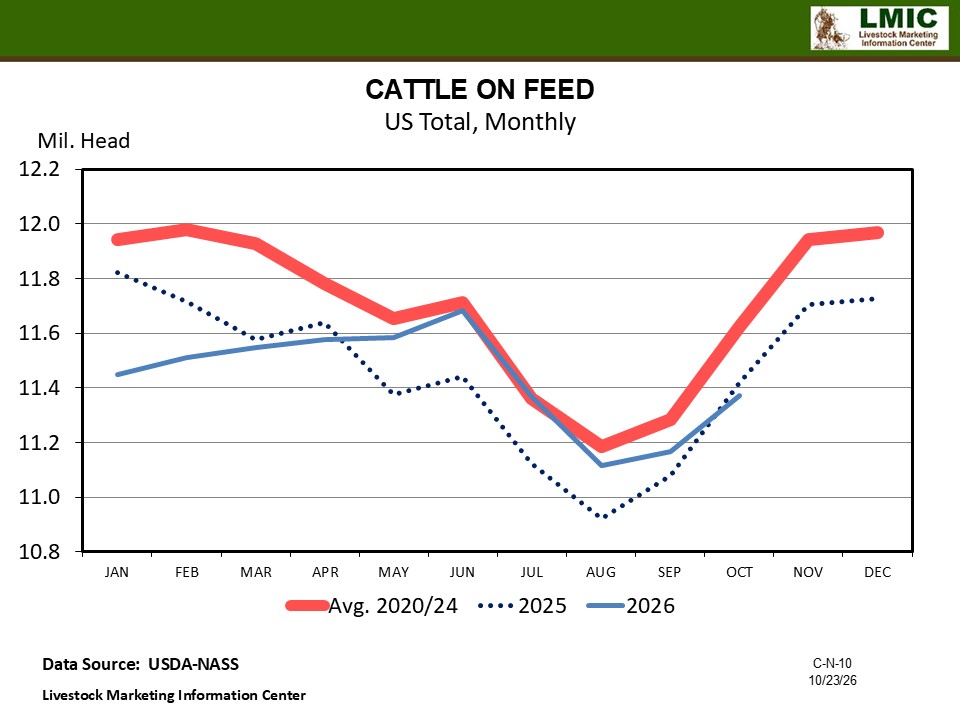
Last Friday’s USDA Cattle on Feed Report continues to communicate rather bullish implications for fed cattle markets in early 2027. Placement of feeder cattle into feedlots during September was down 12% as compared to the same month the prior year.
Livestock Monitor
Updated: 10/23/2026
OCTOBER CATTLE ON FEED LOWER, RED MEAT STOCKS HIGHER
The USDA-National Agricultural Statistics Service (NASS) reported Cattle on Feed as of October 1 to be down 46,000 head (-0.4%) to 11.372 million head. This was the opposite direction of average pre-report expectations, which were expecting a +0.2% increase from last year. The last time cattle on feed were below a year ago was April 2026. Marketings for the month of September were reported at 1.524 million head, down 108,000 head (-6.6%) from last year, which was slightly better than average pre-report expectations of a -7.3% decline. The big surprise in the report was September placements. Prior to the report, average expectations were for an -8.3% decline from last year; actual placements were down -12.1%, or 244,000 head, from last year to 1.777 million head, well below expectations. This Cattle on Feed report was a quarterly report, and USDA-NASS provided a breakout of steers and heifers on feed. The percentage of heifers on feed in October was 37.8%, which is down slightly from 38.1% last year but well above the 32% to 34% range that was reported during the herd rebuilding era in 2015 and 2016.
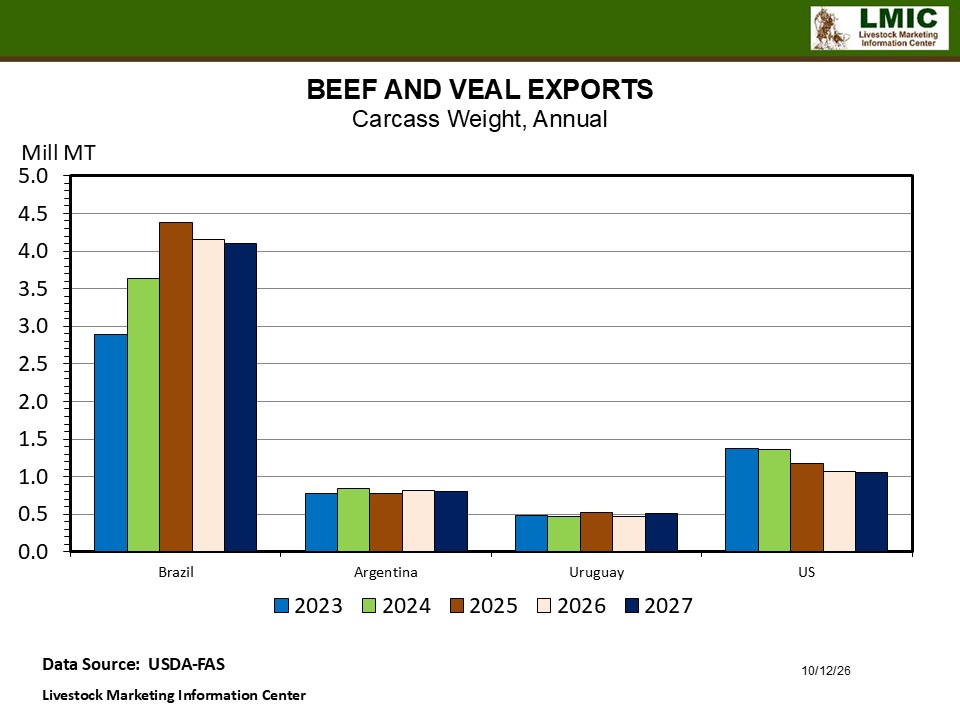
GLOBAL EXPORTS TO DECLINE ACROSS MAJOR SUPPLIERS
The USDA-Foreign Agricultural Service (FAS) released its October Livestock and Poultry: World Markets and Trade report on October 9 with its first forecasts for 2027. For beef, the 2027 story is less about production and more about trade. Global beef production is forecast flat at 60 million metric tons (MT) in 2027. Increases in Argentina (+3% to 3.1 million MT), Uruguay (+10% to 630,000 MT), and India (+2% to 4.7 million MT) were offset by declines in Australia (-2% to 2.9 million MT), the EU (-1% to 6.3 million MT), the U.S. (-1% to 11.8 million MT), and Brazil (-2% to 11.8 million MT). The USDA-forecasted decline in Brazil’s beef production is driven partly by their cattle inventory turning lower as producers retain more heifers and reduce the number of cattle available for slaughter. This is evident by the number of available cattle for slaughter, which has fallen about -11% since 2024.
GRAIN AND HAY MARKET UPDATE
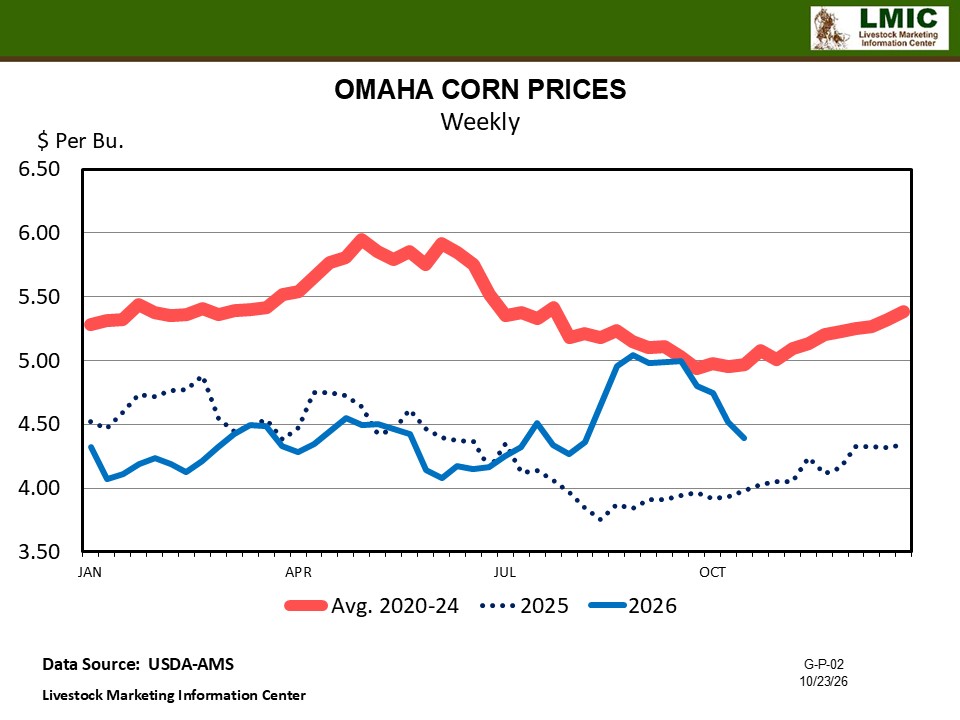
As livestock producers prepare for winter feeding and look ahead to 2027, the outlook for corn and hay prices will help shape feed budgets and purchasing decisions. Corn rallied throughout the summer due to abnormally hot and dry weather across the corn producing states. The price of corn for December Futures on the Chicago Mercantile Exchange peaked at a high of $5.46 per bushel in early September. However, corn prices have since retreated due to bearish reports out of USDA-NASS. The September 1, 2026, corn stocks were reported at 2.095 billion bushels. This was an +8.9% increase from industry expectations and a +35% increase from September 1, 2025, reported stocks. October 9th saw the release of the monthly USDA Crop Production report with a major revision in total production from the September 2026 report.